
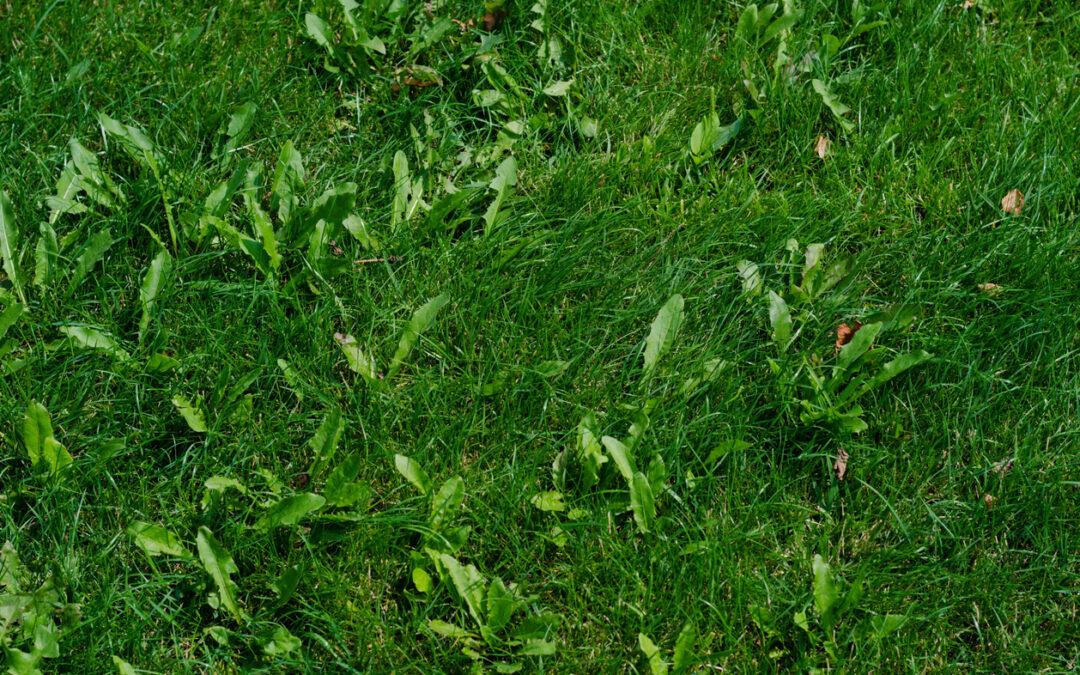
As summer kicks off in Northern Maine, many homeowners begin noticing common weeds popping up throughout their lawns. Some grow faster than the surrounding grass. Others produce flowers, seed heads, or thick patches that stand out from an otherwise healthy lawn.
One of the most common questions we hear this time of year is: “What is growing in my lawn?”
The answer isn’t always simple. Several different weeds thrive during Maine’s summer growing season, and identifying them correctly is the first step toward effective control. Here’s a guide to some of the most common summer weeds found throughout Bangor, Presque Isle, and surrounding Northern Maine communities.
Why Common Summer Weeds Become More Noticeable
Summer creates ideal conditions for many weeds to emerge and spread. Warm soil temperatures, increased sunlight, and occasional stress from heat or drought can create opportunities for weeds to establish themselves.
Weeds are often most successful in lawns that have:
- Thin or bare areas
- Compacted soil
- Poor fertility
- Inconsistent watering
- Damage from insects, disease, or winter stress
Once weeds find an opening, they can spread quickly and compete with desirable turfgrass for sunlight, water, and nutrients.
Crabgrass
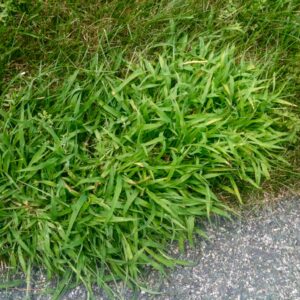 One of the most recognized summer weeds is crabgrass.
Crabgrass is an annual grassy weed that germinates in spring and grows aggressively through summer. It appears as light green clumps with wider blades than typical lawn grasses. As it matures, it spreads outward in a low-growing, crab-like pattern.
How to Identify Crabgrass:
- Light green color
- Coarse, wide leaf blades
- Grows outward from a central point
- Common along driveways, sidewalks, and lawn edges
Crabgrass thrives in thin turf and areas exposed to full sun. Once mature, it produces thousands of seeds that can create future infestations.
Yellow Nutsedge
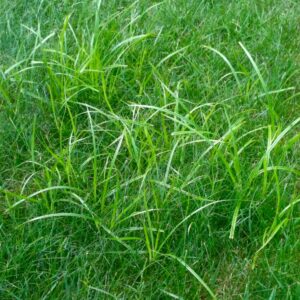 Many homeowners mistake yellow nutsedge for grass because it grows upright and green.
However, yellow nutsedge is actually a sedge, not a grass.
It grows faster than surrounding turf and often sticks out above the lawn just days after mowing.
How to Identify Yellow Nutsedge:
- Bright yellow-green color
- Rapid vertical growth
- Triangular stems when rolled between your fingers
- Prefers wet or poorly drained areas
Because it grows from underground tubers, nutsedge can be difficult to eliminate without targeted treatment.
White Clover
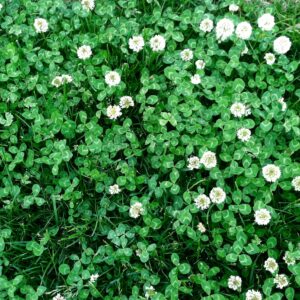 White clover has become increasingly common in lawns throughout Maine.
While some homeowners don’t mind its appearance, others prefer a more uniform turfgrass stand.
How to Identify White Clover:
- Three rounded leaflets
- Small white flower clusters
- Low-growing spreading habit
Clover often appears in lawns with low nitrogen levels because it can produce some of its own nitrogen. Its presence may indicate that the lawn could benefit from improved fertility and turf density.
Plantain
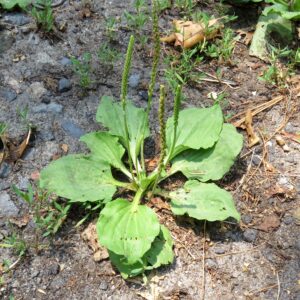 Plantain is a broadleaf weed commonly found in compacted soils.
It forms a low-growing rosette that can survive mowing and foot traffic.
How to Identify Plantain:
- Broad, oval-shaped leaves
- Prominent parallel veins
- Low, flat growth pattern
- Tall seed stalks in summer
Plantain frequently appears in heavily used lawn areas, walkways, and spots where soil compaction is present.
Dandelions
Although often associated with spring, dandelions continue to be active throughout the summer.
How to Identify Dandelions:
- Bright yellow flowers
- Deep taproot
- Jagged leaf edges
- White seed heads that disperse in the wind
Each dandelion can produce hundreds of seeds, allowing populations to spread quickly if left unmanaged.
Black Medic
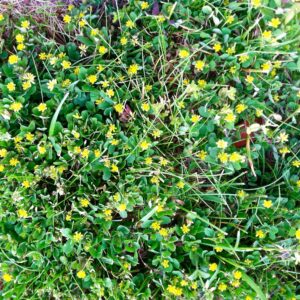 Black medic is sometimes mistaken for clover but has several key differences.
How to Identify Black Medic:
- Small yellow flowers
- Clover-like leaves
- Low-growing, spreading habit
- Thrives in dry or compacted soils
This weed is commonly found in stressed lawns where turfgrass density has declined.
Wild Violet
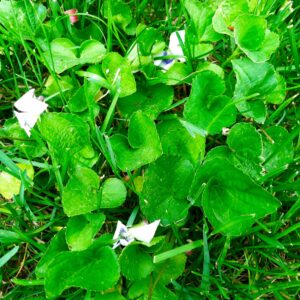 Wild violets can be particularly persistent in Northern Maine lawns.
How to Identify Wild Violet:
- Heart-shaped leaves
- Purple or blue flowers in spring
- Waxy leaf surface
- Spreading underground root system
Because wild violets reproduce through both seeds and underground rhizomes, they can be challenging to control without a comprehensive lawn care strategy.
Why Correct Weed Identification Matters
Not all common summer weeds respond to the same treatment methods.
A product that works well on clover may have little effect on nutsedge. Likewise, grassy weeds like crabgrass require different control strategies than broadleaf weeds such as plantain or dandelions.
Proper identification helps determine:
- Whether treatment is necessary
- The best timing for control
- Which products will be most effective
- How to prevent future infestations
The Best Long-Term Weed Control Strategy
While treating existing weeds is important, prevention remains the most effective approach.
Healthy, dense turfgrass naturally crowds out many common weeds before they become established.
This is why professional lawn care programs focus on:
- Proper fertilization
- Weed control applications
- Soil health management
- Overseeding thin areas
- Correct mowing and watering practices
A thick, healthy lawn leaves fewer opportunities for weeds to invade.
Don’t Guess—Know What’s Growing in Your Lawn
If you’re noticing common summer weeds appearing throughout your lawn this summer, identifying them correctly is the first step toward protecting your investment.
At Northern Turf, our lawn care specialists can help determine exactly what weeds are present and recommend the most effective solutions for Northern Maine growing conditions. Whether you’re dealing with crabgrass, clover, nutsedge, or other invasive weeds, we’re here to help you achieve a healthier, more attractive lawn.
Want help identifying and controlling weeds in your lawn?
Call Northern Turf at 207-544-9420 to learn more about our lawn care programs and weed control services throughout Greater Bangor and Northern Maine. For additional lawn care topics, check out our blog!